Intel has officially nuked rumors about plans to re-brand its Atom chips.
Recent reports indicate that Intel plans to re-brand its Cedar Trail processors slated for 2012 because demand for Atom-based netbooks, nettops, handheld devices, consumer electronics products and embedded devices have dropped significantly. The reason behind the decline, according to industry sources, is due to the "poor brand image" of Atom CPUs.
According to Intel's roadmap, Cedar Trail CPUs will be launched in November 2011, and will include the Atom N2800 and N2700 for netbooks, and the Atom D2700 and D2500 for nettops. Industry sources claim that the re-branding will cover Intel's N/D/Z/E lineups.
But Friday a spokesperson from Intel squashed the reports. "There are no plans to change the Atom brand. We are on track to launch new Atom processors during the fourth quarter, with more new Atom processors during the first half of 2012."
Read full story...
Microsoft CEO hints at 'Metro-ization' of Office
Desktop suite will continue, but Microsoft needs a touch-based edition for tablets, says expert
Computerworld - Microsoft CEO Steve Ballmer on Wednesday strongly hinted that the company will craft a Metro-style version of the next Office suite.
"You ought to expect that we are rethinking and working hard on what it would mean to do Office Metro style," said Ballmer, when asked by a Wall Street analyst whether Microsoft is working on a version of Office for Windows 8's Metro touch-based interface.
Metro is the name Microsoft has given the tile- and touch-based interface borrowed from Windows Phone 7, the smartphone operating system, and before that, Zune, the company's portable music player. The interface is the first thing users see when they launch Windows 8, and apps must be specially-coded to run in Metro.
A Metro style look-and-feel would be a massive change for Office, one that would dwarf the "ribbonization" that set off a firestorm of complaints about Office 2007's new look. The criticism died down, and Microsoft later extended the ribbon in Office 2010 and Windows 7. It will ribbonize other components of Windows 8, notably the OS's file manager.
Read full story...
Computerworld - Microsoft CEO Steve Ballmer on Wednesday strongly hinted that the company will craft a Metro-style version of the next Office suite.
"You ought to expect that we are rethinking and working hard on what it would mean to do Office Metro style," said Ballmer, when asked by a Wall Street analyst whether Microsoft is working on a version of Office for Windows 8's Metro touch-based interface.
Metro is the name Microsoft has given the tile- and touch-based interface borrowed from Windows Phone 7, the smartphone operating system, and before that, Zune, the company's portable music player. The interface is the first thing users see when they launch Windows 8, and apps must be specially-coded to run in Metro.
A Metro style look-and-feel would be a massive change for Office, one that would dwarf the "ribbonization" that set off a firestorm of complaints about Office 2007's new look. The criticism died down, and Microsoft later extended the ribbon in Office 2010 and Windows 7. It will ribbonize other components of Windows 8, notably the OS's file manager.
Read full story...
How To Use HP New Support Page
I was surprised and impressed to see new HP Support page.
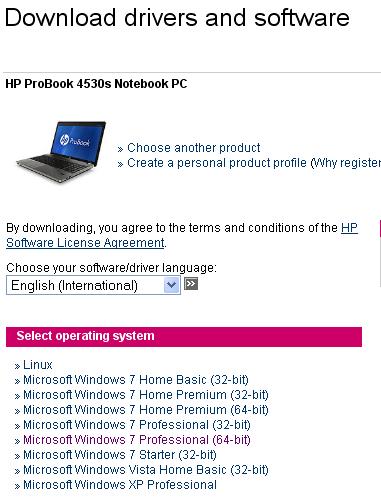
The new page is very user friendly and easy to navigate. Below are simple steps to download needed drivers or software for you HP product.
1. Go to http://www8.hp.com/us/en/support-drivers.html
2. Enter you product name or number in the space provided. You may also allow the site to automatically detect your HP product if you do not know the specific name or number of your item. Auto detection may be a good option however I think it is slower as it has to check the system first.
3. Select your Operating System. Click your Operating System from the list. Happy for Windows user. HP has good support to you but Linux will also be happy to see that HP is now supporting them.
4. Drivers and Software for your selected OS will open available for download. You may use the “Quick jump” option to jump to specific category.
5. Click Download button to start downloading the file.
HP Client Management Solutions - HP System Software Manager
The HP System Software Manager (SSM) is a utility that automatically detects and updates BIOS, device drivers, and management agent versions on your networked PCs.
This is also impressive, especially if you do not mind having another application for this purpose.
New and simple steps above is impressive but I not yet finished giving you easier and more convenient way to update your drivers. I use this third party HP Drivers tool to do all the monitoring, downloading and installing of driver to my computer. What I like about this is its compatibility, other hardware vendors are support by this tool.
The new page is very user friendly and easy to navigate. Below are simple steps to download needed drivers or software for you HP product.
1. Go to http://www8.hp.com/us/en/support-drivers.html
2. Enter you product name or number in the space provided. You may also allow the site to automatically detect your HP product if you do not know the specific name or number of your item. Auto detection may be a good option however I think it is slower as it has to check the system first.
3. Select your Operating System. Click your Operating System from the list. Happy for Windows user. HP has good support to you but Linux will also be happy to see that HP is now supporting them.
4. Drivers and Software for your selected OS will open available for download. You may use the “Quick jump” option to jump to specific category.
5. Click Download button to start downloading the file.
HP Client Management Solutions - HP System Software Manager
The HP System Software Manager (SSM) is a utility that automatically detects and updates BIOS, device drivers, and management agent versions on your networked PCs.
This is also impressive, especially if you do not mind having another application for this purpose.
New and simple steps above is impressive but I not yet finished giving you easier and more convenient way to update your drivers. I use this third party HP Drivers tool to do all the monitoring, downloading and installing of driver to my computer. What I like about this is its compatibility, other hardware vendors are support by this tool.
Microsoft fixes Mac Office bug in Apple's Lion
Computerworld - Microsoft has released an updated version of Communicator for the Mac that works with Apple's new Lion operating system.
Communicator for Mac 2011 version 13.1.2 was released Thursday to Microsoft's download site, and will be pushed to users via the company's update service shortly, a Microsoft product director promised.
The new version of Communicator resolves the crash bug that afflicted the program when users tried to run it on Mac OS X 10.7, the new operating system Apple launched July 20.
Communicator is the corporate version of Microsoft's consumer-grade Messenger chat client for the Mac, and is available only to business and academic volume licensing customers. It is also the software that connects Mac users to Microsoft's enterprise communications server software, Lync 2010.
Last week, Microsoft's Office for Mac development team reported several problems with the 2011 and 2008 editions of the suite when run on Lion.
At the time, the Communicator crash bug and a glitch that prevents users from importing messages from Apple's Mail email client into Outlook 2011 or Entourage 2008 were the top two issues spelled out then by Pat Fox, a senior director of product development.
Read full story...
Communicator for Mac 2011 version 13.1.2 was released Thursday to Microsoft's download site, and will be pushed to users via the company's update service shortly, a Microsoft product director promised.
The new version of Communicator resolves the crash bug that afflicted the program when users tried to run it on Mac OS X 10.7, the new operating system Apple launched July 20.
Communicator is the corporate version of Microsoft's consumer-grade Messenger chat client for the Mac, and is available only to business and academic volume licensing customers. It is also the software that connects Mac users to Microsoft's enterprise communications server software, Lync 2010.
Last week, Microsoft's Office for Mac development team reported several problems with the 2011 and 2008 editions of the suite when run on Lion.
At the time, the Communicator crash bug and a glitch that prevents users from importing messages from Apple's Mail email client into Outlook 2011 or Entourage 2008 were the top two issues spelled out then by Pat Fox, a senior director of product development.
Read full story...
Microsoft Announces Earnings for End of FY 2011
Microsoft has announced its quarterly earnings for the fiscal quarter just ended as well as financial results for its last fiscal year.
Microsoft this week released details for the fourth quarter of the company's 2011 fiscal year, which ended June 30. Redmond recorded revenue of $17.37 billion for the quarter, an eight percent increase from the same period of the prior year. Operating income, net income, and diluted earnings per share for the quarter were $6.17 billion, $5.87 billion, and $0.69 per share, which represented increases of four percent, 30 percent, and 35 percent, respectively, year-over-year.
Because this was the end of Microsoft's FY2011, the company also released details for the entire year. For FY2011, Microsoft reported record revenue of $69.94 billion, a 12 percent increase from the prior year. Operating income, net income, and diluted earnings per share for the year were $27.16 billion, $23.15 billion, and $2.69, which represented increases of 13 percent, 23 percent, and 28 percent year-over-year.
Microsoft reports that its Microsoft Business Division revenue for the fourth quarter grew 7 percent with revenue for the full year increasing 16 percent, while Server and Tools revenue grew 12 percent for the fourth quarter, making it the fifth consecutive quarter of double-digit growth, and grew 11 percent for the full year. Windows and Windows Live Division revenue saw a 1 percent decline for the quarter just ended and revenue for the full year decreased 2 percent. Redmond's Online Services Division revenue grew 17 percent for the quarter and 15 percent for the full year, which the company attributes to increases in search revenue (Bing's U.S. search share increased 340 basis points year-over-year to 14.4 percent this quarter). The ongoing popularity of Microsoft's Xbox 360 and Kinect helped revenue for the Entertainment and Devices Division grow 30 percent for the fourth quarter and massive 45 percent for the year.
Read full story...
Microsoft this week released details for the fourth quarter of the company's 2011 fiscal year, which ended June 30. Redmond recorded revenue of $17.37 billion for the quarter, an eight percent increase from the same period of the prior year. Operating income, net income, and diluted earnings per share for the quarter were $6.17 billion, $5.87 billion, and $0.69 per share, which represented increases of four percent, 30 percent, and 35 percent, respectively, year-over-year.
Because this was the end of Microsoft's FY2011, the company also released details for the entire year. For FY2011, Microsoft reported record revenue of $69.94 billion, a 12 percent increase from the prior year. Operating income, net income, and diluted earnings per share for the year were $27.16 billion, $23.15 billion, and $2.69, which represented increases of 13 percent, 23 percent, and 28 percent year-over-year.
Microsoft reports that its Microsoft Business Division revenue for the fourth quarter grew 7 percent with revenue for the full year increasing 16 percent, while Server and Tools revenue grew 12 percent for the fourth quarter, making it the fifth consecutive quarter of double-digit growth, and grew 11 percent for the full year. Windows and Windows Live Division revenue saw a 1 percent decline for the quarter just ended and revenue for the full year decreased 2 percent. Redmond's Online Services Division revenue grew 17 percent for the quarter and 15 percent for the full year, which the company attributes to increases in search revenue (Bing's U.S. search share increased 340 basis points year-over-year to 14.4 percent this quarter). The ongoing popularity of Microsoft's Xbox 360 and Kinect helped revenue for the Entertainment and Devices Division grow 30 percent for the fourth quarter and massive 45 percent for the year.
Read full story...
Internet Explorer 9 outperforms competing browsers in malware download test
According to a newly released research by NSS Labs, Microsoft’s Internet Explorer 9 greatly outperforms competing browsers in a test against socially-engineered malware. Based on an active testing against 615 malicious URLs for 19 days, both Internet Explorer 9 and Internet Explorer 8 topped the comparative chart.
Here are the findings:
Windows Internet Explorer 9 - IE9 caught an exceptional 92% of the live threats
Windows Internet Explorer 8 - caught 90% of the live threats
Apple Safari 5 - caught 13% of the live threats
Google Chrome 10 - caught 13% of the live threats
Mozilla Firefox 4 - caught 13% of the live threats
Opera 11 - caught 5% of the live threats
Read full story...
Here are the findings:
Windows Internet Explorer 9 - IE9 caught an exceptional 92% of the live threats
Windows Internet Explorer 8 - caught 90% of the live threats
Apple Safari 5 - caught 13% of the live threats
Google Chrome 10 - caught 13% of the live threats
Mozilla Firefox 4 - caught 13% of the live threats
Opera 11 - caught 5% of the live threats
Read full story...
How Do 400 Million Windows 7 Licenses Compare Against Windows XP and Vista History?
Steve Ballmer proudly announced that Microsoft has sold 400 million Windows 7 licenses. It's a big number by any measure, but how does it compare to Windows Vista and Windows XP?
It has become a tradition for me that I am looking a bit closer into Microsoft's operating system license shipments every time Microsoft announces a new number with the subtle remark that a certain Windows is the fastest selling operating system ever. I don't know about you, but I never heard Microsoft ever announcing that any of its OSes was not the fastest selling OS in Windows history. Even Vista was, apparently, but we know that Vista wasn't exactly a success which tells us that a big number does not mean necessarily that a particular OS is a big success.
So, do 400 million Windows 7 licenses mean that Windows 7 is a big hit? Let's see.
We need to break this number down and put it in perspective to actual PC sales. Windows 7 launched on October 22, 2009 and has sold, on average, about 20 million licenses per month since then (give or take a few hundred thousand per month to even out the pre-sales event preceding the OS launch in 2009). During those 20 months, the global PC industry sold about 591 million PCs, which means that Microsoft shipped about 68 Windows licenses for every 100 PCs sold (let's forget the upgrades for a moment and take this number as a way to compare sales).
What is particularly stunning about the 20 million-per-month number is the fact that it is very consistent and there seems to almost clockwork in play to achieve those 20 million units. 100 million Windows 7 licenses were sold after 6 months, 150 million after 8 months, 240 million after 12 months and 300 million after 15 months. It is almost spooky. Windows 7 sales may be declining just a tad from the 8 month mark, but it's not significant.
Windows Vista, in comparison, sold 128 million licenses in 9 months, or 12 months, if we include the 3-month Express Upgrade cycle that enabled Microsoft to make the 2006/2007 holiday season (Vista was officially released to retail in January 2007, but was available through a coupon beginning in October 2006). So, a fair comparison would be that Vista sold just over 10 million units per month in the first year. Microsoft then announced 180 million units in August 2008 or 19/22 months after launch, which dropped the average to about 8 million units per month: interestingly enough, that means that Windows 7 has outsold Vista already as Windows Vista sold 384 million licenses in a best case scenario (48 months * 8 million units) until it was discontinued in October of last year.
Read full story...

It has become a tradition for me that I am looking a bit closer into Microsoft's operating system license shipments every time Microsoft announces a new number with the subtle remark that a certain Windows is the fastest selling operating system ever. I don't know about you, but I never heard Microsoft ever announcing that any of its OSes was not the fastest selling OS in Windows history. Even Vista was, apparently, but we know that Vista wasn't exactly a success which tells us that a big number does not mean necessarily that a particular OS is a big success.
So, do 400 million Windows 7 licenses mean that Windows 7 is a big hit? Let's see.
We need to break this number down and put it in perspective to actual PC sales. Windows 7 launched on October 22, 2009 and has sold, on average, about 20 million licenses per month since then (give or take a few hundred thousand per month to even out the pre-sales event preceding the OS launch in 2009). During those 20 months, the global PC industry sold about 591 million PCs, which means that Microsoft shipped about 68 Windows licenses for every 100 PCs sold (let's forget the upgrades for a moment and take this number as a way to compare sales).
What is particularly stunning about the 20 million-per-month number is the fact that it is very consistent and there seems to almost clockwork in play to achieve those 20 million units. 100 million Windows 7 licenses were sold after 6 months, 150 million after 8 months, 240 million after 12 months and 300 million after 15 months. It is almost spooky. Windows 7 sales may be declining just a tad from the 8 month mark, but it's not significant.
Windows Vista, in comparison, sold 128 million licenses in 9 months, or 12 months, if we include the 3-month Express Upgrade cycle that enabled Microsoft to make the 2006/2007 holiday season (Vista was officially released to retail in January 2007, but was available through a coupon beginning in October 2006). So, a fair comparison would be that Vista sold just over 10 million units per month in the first year. Microsoft then announced 180 million units in August 2008 or 19/22 months after launch, which dropped the average to about 8 million units per month: interestingly enough, that means that Windows 7 has outsold Vista already as Windows Vista sold 384 million licenses in a best case scenario (48 months * 8 million units) until it was discontinued in October of last year.
Read full story...
Subscribe to:
Posts (Atom)